

Businesses across every industry are transitioning from traditional payment methods to digital solutions that offer convenience, speed, and security. An online form payment system combines data collection with transaction processing, creating a seamless experience that benefits both companies and customers. For travel-related services, government fees, and registration processes, implementing the right payment form can dramatically reduce processing time, eliminate queues, and improve customer satisfaction. Understanding how to design, secure, and optimize these digital payment solutions has become essential for modern business operations.
Understanding Online Form Payment Systems
Digital payment forms represent the intersection of information gathering and financial transactions. These tools allow businesses to collect necessary data while simultaneously processing payments, creating a unified experience that eliminates multiple steps.
The fundamental architecture of an online form payment solution includes several critical components working together. Form fields capture customer information, validation rules ensure data accuracy, payment gateways process transactions securely, and confirmation systems provide immediate feedback to users. Each element plays a vital role in creating a smooth transaction flow.
Key components of effective payment forms include:
- Secure data transmission protocols
- Real-time validation of entered information
- Integration with trusted payment processors
- Automated receipt generation
- Mobile-responsive design elements
Modern payment forms have evolved far beyond simple credit card entry fields. They now incorporate sophisticated features like auto-fill capabilities, multi-currency support, and intelligent error messaging that guides users toward successful completion.

Security Standards for Payment Forms
Security represents the cornerstone of any successful online form payment implementation. Customers entrust businesses with sensitive financial information, making robust protection measures non-negotiable.
PCI DSS (Payment Card Industry Data Security Standard) compliance stands as the baseline requirement for any organization handling credit card information. These standards outline specific technical and operational requirements designed to protect cardholder data throughout the transaction process. Organizations must implement network security controls, maintain secure systems, and regularly monitor access to cardholder data.
Understanding PCI compliance requirements for online forms helps businesses avoid costly data breaches and maintain customer trust. Many organizations choose to work with payment processors that handle sensitive data on their behalf, reducing their PCI compliance scope significantly.
Essential Security Measures
Implementing comprehensive security requires multiple layers of protection working in concert.
| Security Layer | Purpose | Implementation Method |
|---|---|---|
| SSL/TLS Encryption | Protects data in transit | Digital certificate installation |
| Tokenization | Replaces card data with tokens | Payment gateway integration |
| Secure Hosting | Prevents server-level attacks | Trusted hosting provider |
| Access Controls | Limits data exposure | Role-based permissions |
The debate about hosting payment pages internally versus using third-party solutions continues across industries. Security experts generally recommend against hosting your own payment forms due to the significant compliance and security challenges involved, as outlined in this comprehensive security analysis.
Two-factor authentication adds another critical security layer. By requiring users to verify their identity through multiple channels, businesses significantly reduce fraudulent transactions. Online payment security best practices emphasize the importance of these additional verification steps.
Designing High-Converting Payment Forms
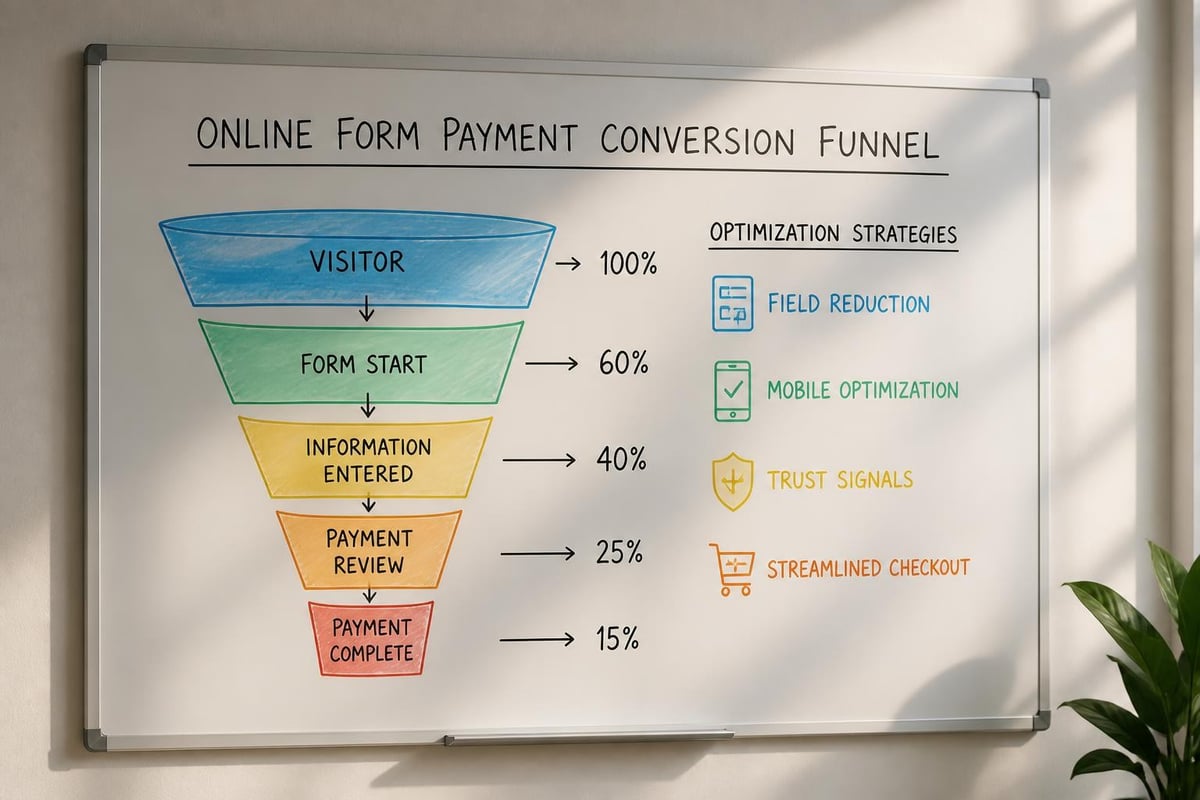
Form design directly impacts completion rates and customer satisfaction. Even minor design choices can create friction that causes users to abandon transactions before completion.
Best practices for payment form design emphasize simplicity, clarity, and reduced cognitive load. Every unnecessary field increases the likelihood of abandonment. Successful forms ask only for essential information, present fields in logical order, and provide clear labels for each input.
Design principles that maximize completion rates:
- Single-column layouts that create natural visual flow
- Inline validation providing immediate feedback
- Progress indicators for multi-step processes
- Clear error messages with specific correction guidance
- Strategic use of white space to reduce visual clutter
Mobile optimization deserves particular attention given that over 60% of online transactions now occur on smartphones and tablets. Forms must adapt seamlessly to smaller screens, with appropriately sized touch targets and keyboard inputs that match field types.
Field Selection and Organization
Strategic field selection balances business needs with user experience. Each additional field creates potential friction, yet insufficient information collection can create problems downstream.
Required fields should be clearly marked, while optional fields should be minimized or eliminated. Grouping related information together helps users process the form more efficiently. For example, contact information fields naturally cluster together, separate from payment details.
Auto-complete functionality dramatically improves user experience by reducing typing effort. Modern browsers support standardized field names that trigger auto-fill suggestions, allowing users to complete forms in seconds rather than minutes.
Payment Gateway Integration
The payment gateway serves as the critical bridge between your form and financial institutions. Selecting the right gateway impacts transaction success rates, processing fees, and customer experience.
Major payment processors offer varying feature sets, fee structures, and integration complexities. Some provide extensive customization options while others prioritize simplicity and speed of implementation. Businesses must evaluate their specific needs against available options.
For services like visitor fees and tourist taxes, payment gateway selection should prioritize reliability and international currency support. Travelers expect to complete transactions quickly without navigating complex payment processes or currency conversion issues.
Integration Approaches
Three primary integration methods exist, each with distinct advantages and trade-offs.
Hosted payment pages redirect users to the gateway's secure servers for payment processing. This approach minimizes PCI compliance requirements but creates a less seamless user experience due to the redirect.
Embedded payment forms use iframes or JavaScript to display gateway-controlled payment fields within your form. This maintains visual consistency while the gateway handles sensitive data collection and PCI compliance.
API-based integration provides maximum control and customization but requires handling sensitive payment data, significantly increasing security and compliance responsibilities.
Optimizing User Experience
User experience optimization extends beyond visual design into the entire transaction journey. From initial form load through confirmation delivery, every touchpoint shapes perception and satisfaction.
Loading speed critically affects form completion rates. Users abandon slow-loading pages at alarming rates, with studies showing that each additional second of load time decreases conversions by approximately 7%. Optimizing image sizes, minimizing JavaScript, and leveraging content delivery networks all contribute to faster load times.
Trust signals reassure users about transaction security. Security badges, clear privacy policies, and professional design elements communicate credibility. Displaying accepted payment methods upfront sets appropriate expectations and prevents last-minute surprises.
Error Handling and Recovery
Sophisticated error handling transforms potential abandonment moments into successful completions. Generic error messages frustrate users, while specific, actionable guidance facilitates problem resolution.
Real-time validation catches issues immediately, allowing users to correct problems before submission. This approach proves far more effective than displaying all errors after form submission, which can overwhelm and discourage users.
When errors do occur, the form should preserve entered information, requiring users only to correct problematic fields rather than re-entering everything. This consideration shows respect for user time and effort.
Advanced Payment Form Features
Modern online form payment systems offer sophisticated features that enhance functionality and user experience beyond basic transaction processing.
Recurring payment support enables subscription-based models and installment plans. This functionality proves particularly valuable for membership fees, ongoing services, and high-value purchases that benefit from payment spreading.
Advanced features that enhance payment forms:
- Multi-currency support for international customers
- Partial payment and deposit options
- Coupon and discount code application
- Save payment methods for future use
- Alternative payment methods (digital wallets, bank transfers)
Digital wallet integration (Apple Pay, Google Pay, PayPal) streamlines checkout by reducing required fields. Users authenticate once through their preferred wallet, eliminating manual data entry entirely.

Testing and Quality Assurance
Comprehensive testing ensures payment forms function correctly across all scenarios and user conditions. A single bug in a payment form can result in lost revenue, frustrated customers, and damaged reputation.
Testing must cover multiple dimensions simultaneously. Functional testing verifies that all form elements work as intended. Security testing identifies vulnerabilities before malicious actors can exploit them. Usability testing reveals friction points that decrease conversion rates.
Critical testing scenarios include:
- Valid payment processing with various card types
- Appropriate rejection of invalid payment information
- Correct handling of network timeouts and interruptions
- Proper display across different browsers and devices
- Accessibility compliance for users with disabilities
Cross-browser and cross-device testing remains essential despite modern web standards. Different platforms handle forms differently, and what works perfectly in Chrome on desktop may fail in Safari on iOS. Automated testing tools can accelerate this process, but manual testing still catches issues that automation misses.
Analytics and Continuous Improvement
Data-driven optimization transforms good payment forms into exceptional ones. By tracking user behavior and analyzing completion patterns, businesses identify specific improvement opportunities.
Form analytics reveal where users abandon the process, which fields cause the most problems, and how completion rates vary across devices or traffic sources. This information guides targeted improvements rather than guesswork.
| Metric | What It Reveals | Target Range |
|---|---|---|
| Completion Rate | Overall form effectiveness | 60-80% |
| Time to Complete | Form complexity and friction | 2-5 minutes |
| Field-Level Drop-off | Problem fields needing revision | <5% per field |
| Error Rate | Validation and clarity issues | <10% |
| Mobile vs Desktop | Device optimization needs | Within 10% parity |
A/B testing allows systematic comparison of different approaches. Testing headline variations, button colors, field order, or trust signal placement reveals what resonates most effectively with your specific audience.
Selecting the right online form builder platform significantly impacts your ability to implement, test, and optimize payment forms efficiently. Different platforms offer varying levels of payment integration, analytics capabilities, and customization options.
Compliance and Legal Considerations
Beyond PCI compliance, payment forms must navigate various legal and regulatory requirements that vary by jurisdiction and industry.
Data privacy regulations like GDPR in Europe and CCPA in California impose strict requirements on how businesses collect, store, and use customer information. Payment forms must include appropriate consent mechanisms, privacy notices, and data retention policies.
Tax collection adds another layer of complexity, particularly for businesses serving customers across multiple jurisdictions. Automated tax calculation based on customer location helps ensure compliance while maintaining transparent pricing.
Documentation and Transparency
Clear terms and conditions protect both businesses and customers. Payment forms should link to comprehensive terms that explain refund policies, processing timelines, and dispute resolution procedures.
Transparent fee disclosure builds trust and reduces chargebacks. Unexpected fees at checkout represent a primary driver of cart abandonment. All costs should be clearly presented before users enter payment information.
Receipt delivery serves both operational and legal purposes. Automated email confirmations provide customers with transaction records while documenting that the business fulfilled its obligation to provide proof of purchase.
Mobile-First Payment Design
Mobile devices now dominate internet usage, making mobile optimization essential rather than optional for payment forms. The constraints of smaller screens demand careful consideration of every design element.
Touch-friendly interfaces require larger tap targets than desktop mouse-based interactions. Buttons and form fields should be sized appropriately for finger interaction, with adequate spacing to prevent accidental taps on adjacent elements.
Keyboard optimization improves data entry speed and accuracy on mobile devices. Using appropriate input types (email, tel, number) triggers specialized keyboards that make entering specific data types faster and easier.
Mobile optimization strategies include:
- Simplified layouts with minimal scrolling
- Large, easily tappable buttons
- Appropriate keyboard types for each field
- Minimal typing through dropdowns and selections
- Clear visual feedback for touch interactions
Reducing fields becomes even more critical on mobile devices where screen space is limited and typing is more cumbersome. Every eliminated field significantly improves mobile completion rates.
Integration with Business Systems
Payment forms rarely operate in isolation. Integration with broader business systems creates operational efficiencies and enhances customer experience.
Customer relationship management (CRM) integration ensures payment data flows into existing customer records. This connection enables better service, personalized communication, and comprehensive customer history tracking.
Accounting system integration automates financial record-keeping, reducing manual data entry and associated errors. Transactions flow directly into financial software, ensuring accurate books and simplifying reconciliation.
Automated email workflows triggered by form completion enhance customer communication. Confirmation emails, receipt delivery, and follow-up sequences can all activate based on successful payment processing.
For organizations managing visitor services, integrating payment forms with arrival processing systems streamlines the entire customer journey from initial payment through final service delivery.
Future Trends in Online Payment Forms
The payment form landscape continues evolving as technology advances and customer expectations shift. Understanding emerging trends helps businesses prepare for future requirements.
Artificial intelligence is beginning to influence form design through personalization and predictive field completion. Smart forms adapt based on user behavior, displaying relevant fields while hiding unnecessary ones.
Biometric authentication is expanding beyond mobile devices into web-based payment forms. Fingerprint and facial recognition offer security benefits while simplifying the authentication process for users.
Cryptocurrency payment integration represents another frontier, with some businesses beginning to accept digital currencies alongside traditional payment methods. While still niche, this trend may expand as cryptocurrency adoption grows.
Voice-based form completion remains experimental but shows promise for hands-free payment processing in specific contexts. As voice recognition accuracy improves, this modality may become more prevalent.
Implementing effective online form payment systems requires balancing security, usability, and business requirements while continuously optimizing based on data and user feedback. For travelers planning visits to Bonaire, Bonaire Tax offers a streamlined digital solution for paying your visitor entry tax in advance, helping you avoid arrival queues and start your vacation immediately upon landing.