

Planning a trip to Bonaire requires understanding the island's visitor entry requirements, particularly the mandatory tourist tax introduced in July 2022. This Caribbean paradise, known for its pristine diving sites and commitment to environmental preservation, has implemented a straightforward visitor fee system that supports the island's infrastructure and sustainability initiatives. Whether you're a first-time visitor or returning to explore Bonaire's turquoise waters and vibrant coral reefs, understanding the bonaire visitor entry tax ensures a smooth arrival experience and contributes to the island's continued excellence as a premier diving destination.
Understanding Bonaire's Unique Position in the Caribbean
Bonaire stands apart from other Caribbean islands as a special municipality of the Netherlands located in the southern Caribbean Sea. This distinctive political status influences everything from currency to infrastructure development.
The island operates using the US dollar as its official currency, making financial transactions straightforward for North American visitors. Unlike neighboring islands that gained independence, Bonaire maintains close ties with the Netherlands while developing its own local governance structures.
Geographic and Cultural Significance
Bonaire forms part of the ABC islands alongside Aruba and Curaçao, positioned just 50 miles north of Venezuela's coast. The island stretches approximately 24 miles long and 5 miles wide, encompassing roughly 111 square miles of land.
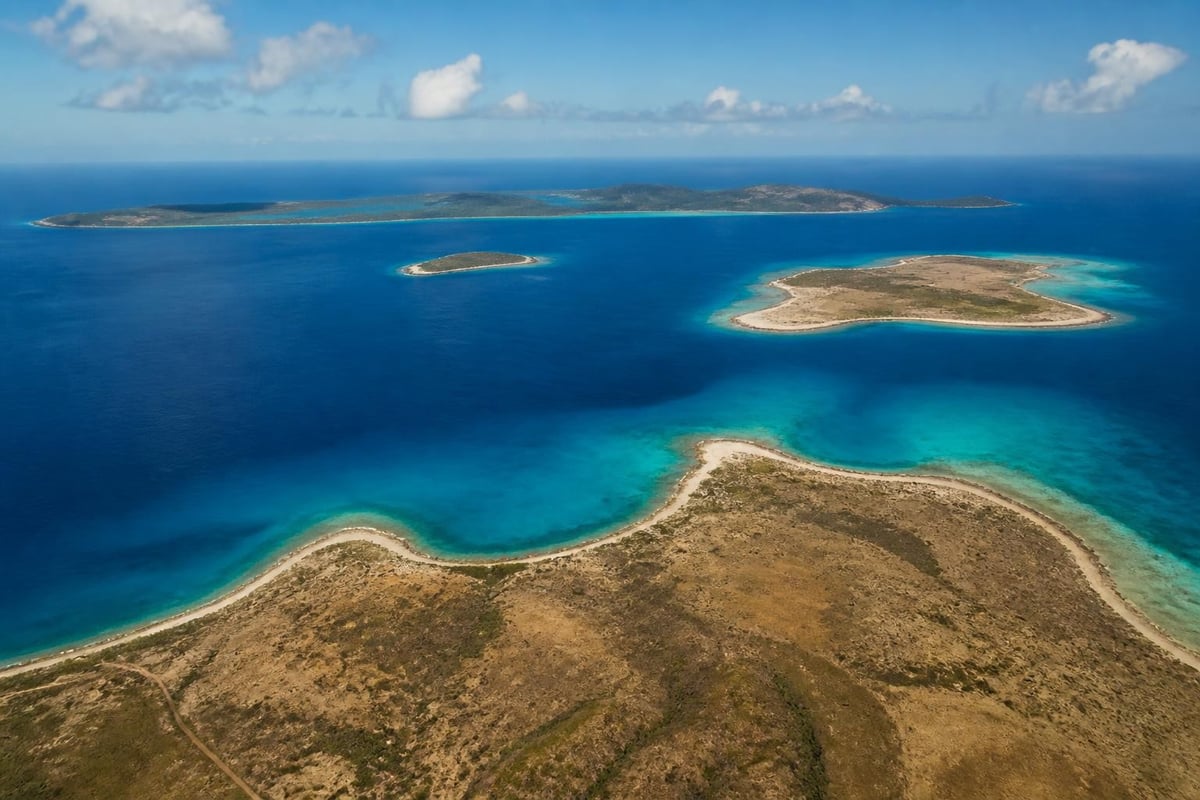
The population of approximately 22,000 residents creates a welcoming, small-town atmosphere where tourism represents a primary economic driver. Papiamento serves as the local language alongside Dutch and English, reflecting the island's multicultural heritage.
Key characteristics that define Bonaire:
- Protected marine park surrounding the entire coastline
- Designated UNESCO World Heritage site for Lac Bay and surrounding areas
- Year-round temperatures averaging 82°F with minimal rainfall
- Trade winds providing consistent breezes and ideal conditions for water sports
- Desert landscape featuring cacti, divi-divi trees, and flamingo sanctuaries
The Evolution of Tourism Taxation on the Island
Prior to July 2022, Bonaire operated under a different tax structure that separated accommodation and rental car taxes. Visitors paid room tax directly to hotels and rental car tax to vehicle providers, creating multiple transaction points throughout their stay.
The Tourism Corporation Bonaire recognized inefficiencies in this fragmented approach. The implementation of a centralized visitor entry tax streamlined the process while increasing transparency about how tourism revenues support island development.
Transition from Previous Tax Systems
The former room tax varied by accommodation type, while rental car taxes applied per vehicle regardless of duration. This created confusion among visitors and administrative challenges for businesses collecting these fees.
| Previous System | Current System |
|---|---|
| Room tax per night | Single entry fee |
| Separate rental car tax | Included in entry fee |
| Paid to individual businesses | Paid directly to government |
| Variable rates | Fixed rate structure |
The bonaire visitor entry tax consolidates these payments into a single transaction completed before or upon arrival. This change reduces paperwork for local businesses and provides visitors with clear expectations about total costs.
Comprehensive Breakdown of Visitor Entry Tax Rates
Understanding the specific rates and requirements helps travelers budget accurately for their Bonaire adventure. The tax structure differentiates between visitor categories based on residency and age.
Standard Rates for International Visitors
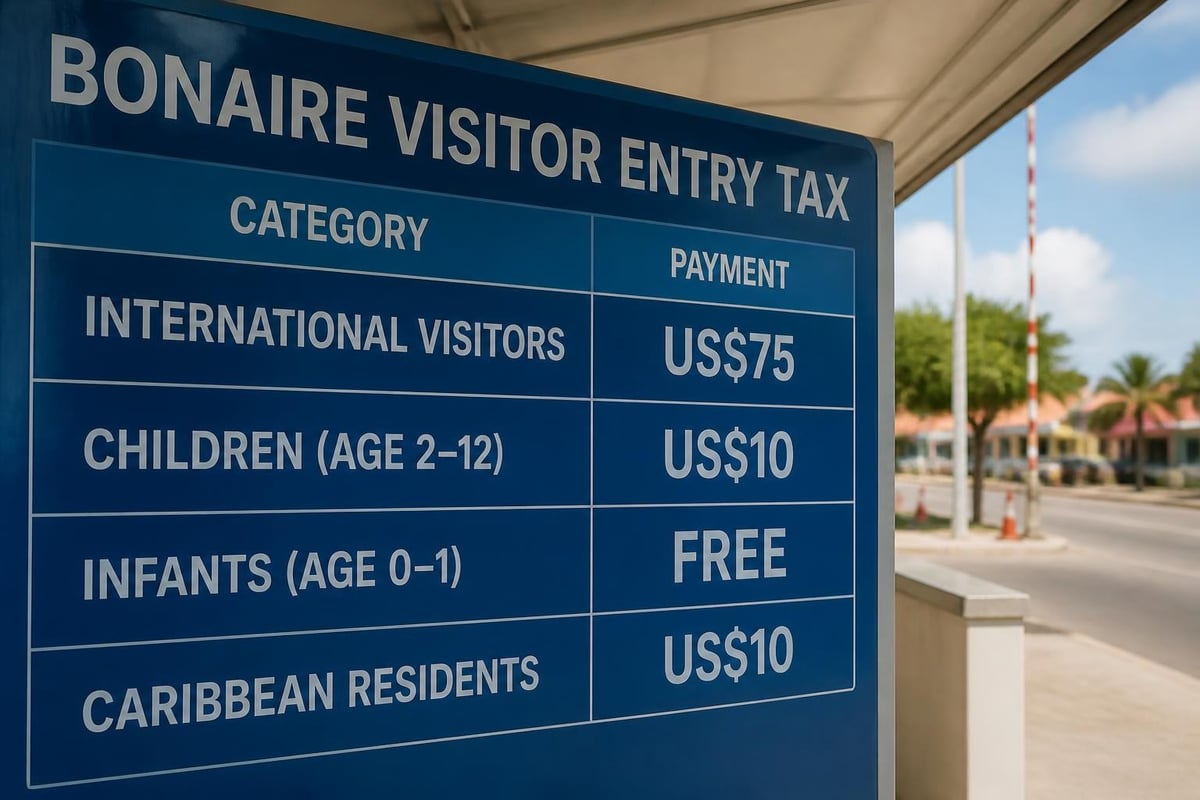
Foreign visitors aged 13 and older pay $75 USD per person as the bonaire visitor entry tax. This fee applies regardless of stay duration, whether visiting for three days or three months.
Children aged 2 through 12 pay a reduced rate of $10 USD. Infants under 2 years old enter Bonaire tax-free, recognizing that young children place minimal demand on island infrastructure.
Rate structure breakdown:
- Adults and teenagers (13+): $75 USD
- Children (2-12 years): $10 USD
- Infants (under 2): Free
- Residents of former Netherlands Antilles islands: $10 USD
The special rate for residents of sister islands acknowledges regional connections. Visitors from Aruba, Curaçao, Sint Maarten, Saba, and Sint Eustatius pay only $10 USD with proper documentation proving residency.
Documentation Requirements for Reduced Rates
Claiming the reduced Caribbean resident rate requires specific documentation. Acceptable proof includes a valid ID card or passport from one of the sister islands showing current residency status.
Without proper documentation, visitors pay the standard international rate. Immigration officials verify documentation upon arrival, so travelers should keep residency proof easily accessible.
Payment Methods and Timing Strategies
The bonaire visitor entry tax offers multiple payment options designed to accommodate different travel preferences. Selecting the right payment method significantly impacts your arrival experience.
Advance Online Payment Benefits
Paying the visitor entry tax online before departure provides substantial advantages. The online payment system operates 24/7, allowing travelers to complete the process at their convenience weeks or days before travel.
Processing an online payment takes approximately 5-10 minutes. Visitors receive a confirmation receipt via email immediately after successful payment, which should be printed or saved digitally for presentation upon arrival.
Advantages of prepayment:
- Skip the arrival kiosk queues entirely
- Complete payment in your preferred environment without time pressure
- Receive immediate confirmation for travel documentation
- Avoid potential payment system issues at arrival
- Budget trip costs comprehensively before departure
Arrival Payment Procedures
Visitors who choose to pay upon arrival at Flamingo International Airport encounter designated kiosks in the arrival hall. These kiosks accept credit cards, debit cards, and cash in US dollars.
Wait times at arrival kiosks vary significantly based on flight schedules. Peak arrival times, particularly Saturday mornings when multiple flights arrive simultaneously, can result in 30-45 minute queues.
The kiosks provide multilingual instructions in English, Dutch, Spanish, and Papiamento. Customer service representatives remain available during operating hours to assist with payment difficulties or documentation questions.
How Tax Revenue Supports Island Development
Understanding where visitor entry tax funds flow demonstrates Bonaire's commitment to sustainable tourism development. The revenue allocation directly impacts the visitor experience and island preservation efforts.
Infrastructure Investment Priorities
The detailed information about how funds support island initiatives shows transparent allocation across multiple sectors. Road improvements, particularly the coastal road accessing prime diving sites, receive regular maintenance funded by tourism taxes.
Airport facility upgrades enhance arrival and departure experiences. Recent improvements include expanded baggage handling systems, updated restroom facilities, and enhanced cooling systems throughout the terminal.
Port infrastructure supporting cruise ship visitors also benefits from these funds. Although Bonaire emphasizes stay-over tourism rather than cruise passengers, maintaining port facilities ensures economic diversification.
Primary allocation categories:
| Sector | Investment Focus | Visitor Impact |
|---|---|---|
| Education | Tourism training programs | Better service quality |
| Infrastructure | Roads, utilities, facilities | Improved accessibility |
| Tourism Development | Marketing, visitor services | Enhanced experiences |
| Sustainability | Marine protection, conservation | Preserved natural beauty |
Environmental and Marine Conservation
Bonaire's reputation as a world-class diving destination depends on protecting its marine ecosystem. Visitor entry tax revenue funds marine park rangers, mooring buoy maintenance, and coral restoration projects.
The island established the Bonaire National Marine Park in 1979, one of the first protected marine areas in the Caribbean. Today's conservation efforts include monitoring fish populations, enforcing diving regulations, and educating visitors about responsible reef interaction.
Land-based conservation initiatives protect Washington Slagbaai National Park, flamingo breeding grounds, and endemic species habitats. These areas require ongoing maintenance, trail development, and ranger services funded partially through tourism revenues.
Visitor Experience and Arrival Process
Modern travelers value efficiency and clarity when navigating international entry requirements. Bonaire's visitor entry process balances thoroughness with speed.
Step-by-Step Arrival Guide
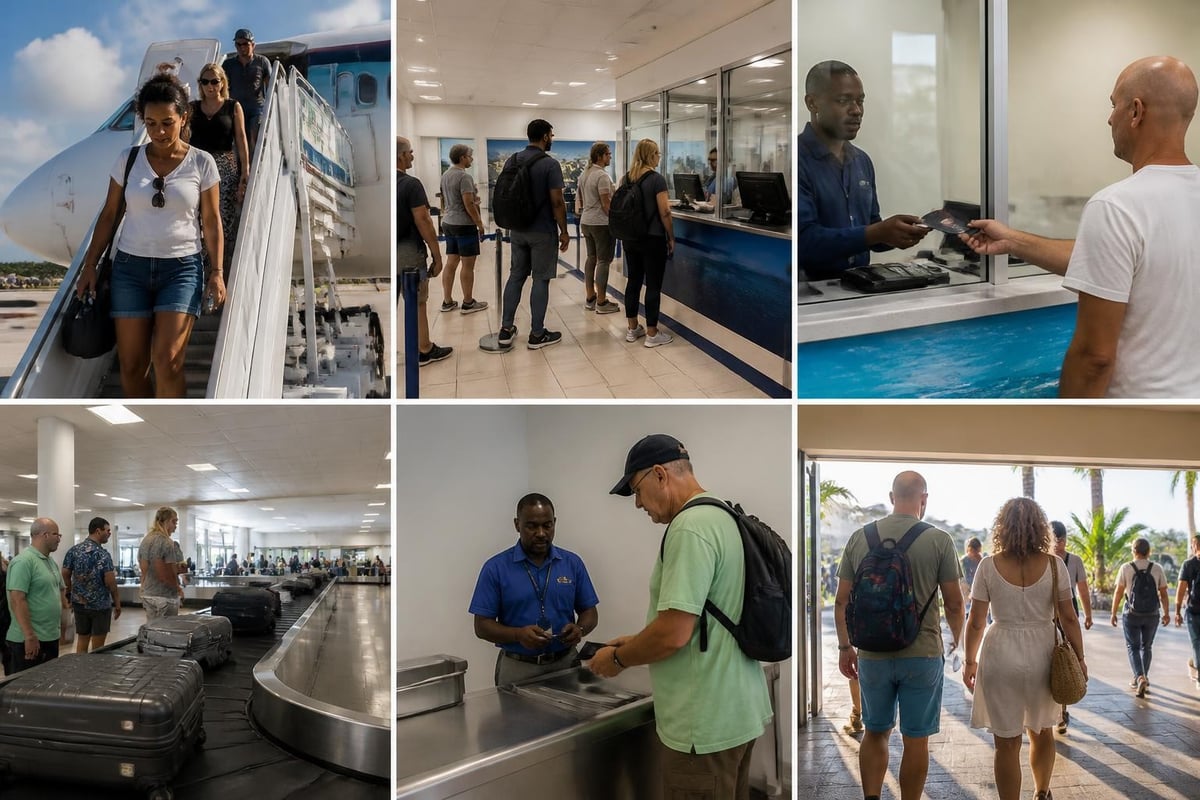
International flights arrive at Flamingo International Airport, a compact facility that processes passengers efficiently. After deplaning, visitors proceed through several checkpoints before entering Bonaire.
Immigration review occurs first, where officers verify passports and entry documentation. This process typically takes 2-5 minutes per passenger depending on queue length and documentation complexity.
Visitors who prepaid their bonaire visitor entry tax present their confirmation receipt at a dedicated verification station. This expedited lane significantly reduces processing time compared to the payment kiosk route.
Complete arrival sequence:
- Deplane and proceed to immigration hall
- Join appropriate queue (prepaid or payment required)
- Present passport and entry documentation to immigration
- Show visitor entry tax payment confirmation or proceed to kiosk
- Collect baggage from carousel
- Pass through customs declaration
- Exit to ground transportation area
Integration with Nature Fee Requirements
Separate from the visitor entry tax, most visitors purchase a Bonaire National Marine Park Nature Tag for access to diving sites, beaches, and Washington Slagbaai National Park. This fee costs $45 annually for adults.
The comprehensive payment guide explains that the nature fee and visitor entry tax serve different purposes. The entry tax supports general infrastructure, while the nature fee specifically funds environmental protection.
Many dive shops include the nature fee in package pricing or facilitate purchase on behalf of customers. However, purchasing the nature tag online alongside the visitor entry tax streamlines the entire arrival process.
Common Questions and Practical Considerations
First-time visitors frequently encounter similar questions about the bonaire visitor entry tax. Addressing these concerns helps travelers prepare comprehensively.
Exemptions and Special Circumstances
Dutch citizens and residents of Bonaire, Sint Eustatius, and Saba qualify for exemption from the visitor entry tax. Proper identification proving residency status must be presented at immigration.
Official government business visitors traveling on diplomatic passports may qualify for exemptions. These cases require advance coordination with Bonaire immigration authorities and appropriate documentation.
Transit passengers who remain in the airport without formally entering Bonaire don't pay the visitor entry tax. However, this situation rarely occurs given Bonaire's limited role as a connection point for onward travel.
Refund Policies and Payment Corrections
The visitor entry tax is generally non-refundable once paid, even if travel plans change. This policy reflects the administrative costs of processing payments and maintaining the system.
Duplicate payments occasionally occur when travelers pay both online and at arrival kiosks. In these situations, visitors should contact Bonaire immigration authorities with both payment receipts to request refund processing.
Payment errors, such as incorrect passenger information or payment amounts, can be corrected by contacting the appropriate authorities before travel. Providing transaction details and correct information facilitates quick resolution.
Planning Your Bonaire Adventure
Beyond tax requirements, successful Bonaire trips require understanding the island's unique characteristics and planning accordingly. The island caters to specific tourism niches rather than mass-market beach resort experiences.
Diving and Underwater Activities
Bonaire ranks among the world's top shore diving destinations, with over 60 marked dive sites accessible directly from the coast. The island's fringing reef lies just yards from shore in many locations, eliminating boat dive requirements.
Visibility typically exceeds 100 feet year-round, with water temperatures ranging from 78-82°F. The protected marine park prohibits anchoring on reefs, requiring boats to use fixed mooring buoys at designated sites.
Dive operators range from full-service resorts to small shops renting equipment and filling tanks. Many visitors opt for self-guided diving using rental trucks to access various sites throughout their stay.
Top diving experiences include:
- Night diving at Town Pier among tarpon and other nocturnal species
- Double reef formations at sites like 1000 Steps
- Salt Pier's massive underwater pillars hosting schools of tropical fish
- Klein Bonaire's pristine sites accessible by short boat ride
- Wreck diving at the Hilma Hooker, a 236-foot freighter
Non-Diving Activities and Attractions
While diving dominates Bonaire's tourism identity, the island offers diverse activities for non-divers. Windsurfing and kiteboarding thrive at Lac Bay, where shallow waters and consistent trade winds create ideal conditions.
Washington Slagbaai National Park encompasses 13,500 acres of desert landscape, secluded beaches, and hiking trails. The park requires 4×4 vehicles for access and offers opportunities to observe native wildlife including parrots, iguanas, and flamingos.
Kayaking through mangrove forests provides eco-tourism experiences highlighting coastal ecosystems. Guided tours explain mangrove importance as fish nurseries and coastal protection systems.
Cultural attractions include the historic downtown area of Kralendijk, colorful slave huts along the southern coast, and the Salt Flats where traditional salt harvesting continues today.
Accommodation Options Across Price Ranges
Bonaire's accommodation landscape emphasizes dive resorts and vacation rentals rather than large all-inclusive properties. This approach maintains the island's laid-back character while providing diverse options.
Budget-conscious travelers find value in apartment-style accommodations with kitchenettes, reducing meal costs through self-catering. Many properties include weekly dive package discounts through affiliated operators.
Mid-range resorts typically offer oceanfront locations, on-site dive facilities, restaurants, and pools. These properties balance comfort with the casual atmosphere Bonaire visitors prefer.
Luxury options include boutique hotels with personalized service, upscale villas with private pools, and eco-resorts emphasizing sustainability without sacrificing amenities.
Transportation and Getting Around the Island
Bonaire's compact size and excellent road conditions make self-driving the preferred transportation method. Public transportation options remain limited compared to larger Caribbean islands.
Vehicle Rental Considerations
Rental vehicles range from compact cars to 4×4 trucks, with pricing varying based on vehicle type and rental duration. Most dive-focused visitors choose pickup trucks accommodating dive gear and accessing remote beach sites.
International driver's licenses aren't required for visitors from most countries. US, Canadian, and European licenses remain valid for the duration of visitor stays.
Driving occurs on the right side of the road, following similar conventions to North America. Speed limits range from 25-50 mph depending on location, with lower limits in residential areas.
Navigation and Road Conditions
The main coastal road circles most of the island, with clearly marked turnoffs to dive sites, beaches, and attractions. Site markers use yellow stones painted with site names and numbers corresponding to dive guide references.
Navigation apps function reliably on Bonaire, though cellular coverage can be spotty in remote areas of Washington Slagbaai National Park. Many dive sites use distinctive landmarks making them easy to locate.
Road conditions remain generally excellent on paved routes. Unpaved roads accessing some dive sites require cautious driving but remain passable in standard vehicles. Washington Slagbaai's interior routes mandate 4×4 vehicles.
Practical Travel Tips for Seamless Visits
Experienced Bonaire visitors develop strategies maximizing enjoyment while minimizing common frustrations. These insights prove valuable for first-time visitors planning their trips.
Timing and Seasonal Considerations
Bonaire enjoys year-round diving conditions without a defined high or low season for weather. However, visitor volume peaks from December through April when North Americans escape winter weather.
Summer months offer advantages including lower accommodation rates, smaller crowds at dive sites, and easier restaurant reservations. The trade-off involves slightly warmer temperatures and occasional brief rain showers.
Hurricane season technically runs June through November, but Bonaire's position below the hurricane belt results in minimal storm impact. The island rarely experiences hurricanes directly, though occasional tropical storms bring increased rainfall.
Money Matters and Budgeting
ATMs throughout Kralendijk and at the airport dispense US dollars. Credit cards enjoy wide acceptance at restaurants, dive shops, and accommodations, though small vendors may prefer cash.
Tipping practices follow US conventions, with 15-20% appropriate for restaurant service. Some establishments include service charges automatically, so reviewing bills prevents double tipping.
Grocery costs exceed US mainland prices due to import requirements. Shopping at larger supermarkets like Van den Tweel or Warehouse Bonaire provides better value than smaller convenience stores.
Communication and Connectivity
Mobile phone service works reliably in populated areas through local carriers offering tourist SIM cards and data packages. US carriers with Caribbean roaming plans provide coverage, though verifying specific plan details prevents unexpected charges.
WiFi availability is standard at accommodations, restaurants, and cafes. Connection speeds support video calls and streaming, though bandwidth may slow during peak evening hours.
Emergency services use 911 as the universal number, similar to US systems. Medical facilities include Fundashon Mariadal hospital and multiple clinics handling routine care and dive-related emergencies.
Cultural Etiquette and Community Interaction
Respecting local culture and environmental practices enhances visitor experiences while supporting Bonaire's sustainable tourism goals. The island's small population values genuine interaction over transactional tourism relationships.
Environmental Responsibility
Marine park regulations prohibit touching, standing on, or collecting coral and marine life. These rules protect the ecosystem and carry enforcement through fines and potential diving privilege suspension.
Reef-safe sunscreen use is strongly encouraged, though not yet mandated. Chemical sunscreens containing oxybenzone and octinoxate damage coral, making mineral-based alternatives the responsible choice.
Turtle nesting season (May through November) brings special beach access restrictions protecting endangered sea turtles. Observing nesting turtles requires maintaining distance and avoiding artificial lighting that disorients hatchlings.
Community Engagement
Supporting locally-owned businesses distributes tourism revenue throughout the community. Bonaire offers numerous family-run restaurants, dive operators, and shops providing authentic experiences.
Learning basic Papiamento phrases demonstrates respect for local culture. Simple greetings like "bon dia" (good morning) and "danki" (thank you) are warmly received.
The island's relaxed pace differs markedly from urban environments. Embracing "island time" and patient attitudes aligns expectations with local culture, reducing frustration over service timing.
Understanding the bonaire visitor entry tax and broader entry requirements sets the foundation for exceptional Caribbean experiences on this unique island. From world-class diving to environmental conservation, every aspect of Bonaire's tourism infrastructure reflects commitment to sustainable development and visitor satisfaction. Whether you're planning your first visit or returning to familiar dive sites, Bonaire Tourist Tax simplifies the payment process, allowing you to focus on the adventures ahead rather than arrival logistics.